In short. Lend only what you can accept losing, agree an amount and a date, put it in writing, note it straight away and ask for it back early, in plain words. Vagueness is the number-one enemy of relationships when money is involved.
It’s common, and rarely talked about
An Ifop poll for Circle carried out in November 2017 among 1,018 people in France showed that about half say they lend money to those close to them, and 31% say they borrow. The same poll reveals some unease: among lenders, only 59% dare ask for repayment of less than €25, and those who do often say they feel embarrassed (30%) or nervous (26%). The poll is dated, but the reflex it describes is still very common: we lend easily and ask back with difficulty.
Rule 1 — Lend what you can accept losing
Before saying yes, ask yourself: if this money never came back, would it change my month? If so, lend less, or say no. Politely refusing costs the relationship less than a loan that drags on.
Rule 2 — Agree an amount and a date
“I’ll pay you back when I can” is the sentence that prepares the misunderstanding. Agree an amount, a deadline, and a pace if it’s in instalments: “€150, €50 a month for three months”.
Rule 3 — Put it in writing, even simply
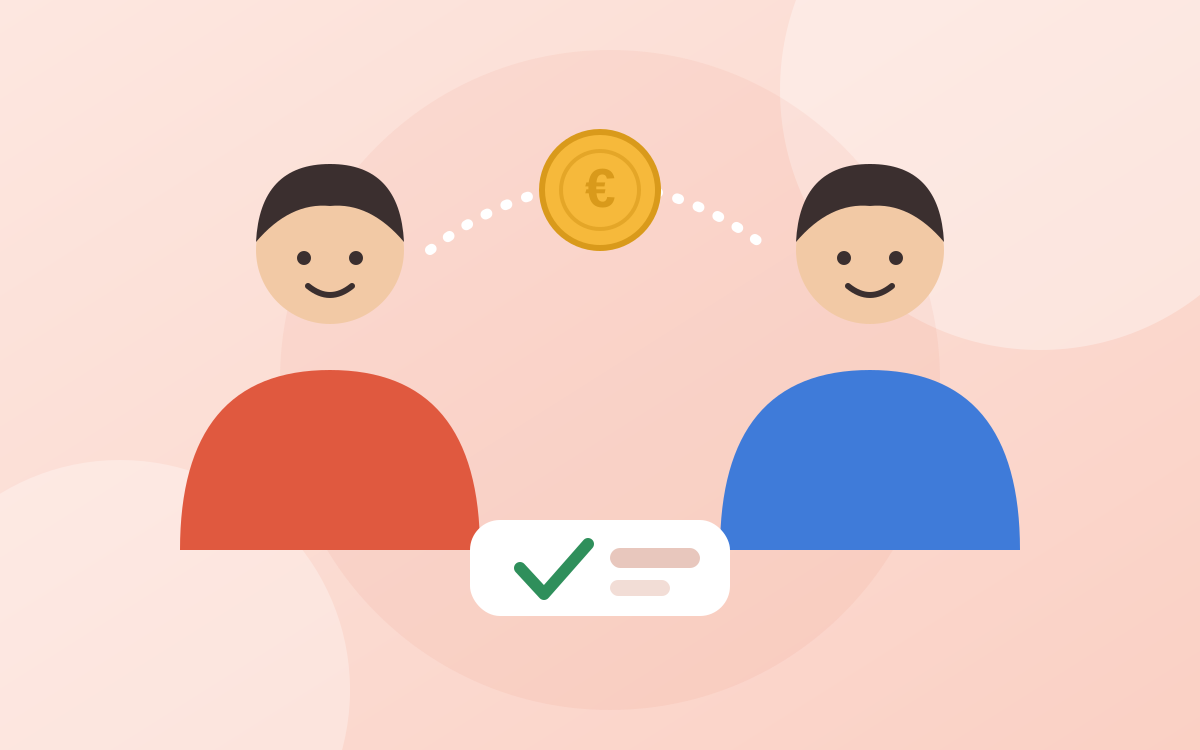
For small sums, a message is enough: “Confirming that I’m lending you €150, which you’ll pay back in three instalments before the end of December.” For a larger sum, draw up an acknowledgement of debt. The exact rules depend on the amount and on where you live: check an official source (in France, justice.fr), and ask a professional about a specific case.
Rule 4 — Note it straight away
The problem is often not the loan itself but forgetting: a restaurant advance, a train ticket paid for two, a shared gift. Note each amount the same day, with the person and the date. What you don’t write down, you end up forgetting or disputing.
Rule 5 — Ask early, in plain words
The longer you wait, the more awkward it gets. A few phrasings that go down well:
- “I’m doing my monthly accounts: could you pay me back the €40 from the weekend when you have a moment?”
- “We said end of the month for the €150: could you do it this week?”
- “If it’s tight right now, we can spread it out: tell me what would suit you.”
When the other person doesn’t pay back
Start with a conversation, not a reproach: most delays come from embarrassment, not bad faith. Suggest a realistic schedule. If nothing moves, that’s information too: you now know this person can’t, or won’t, and you adjust your future loans.
What Pockeo does for this
Pockeo has a debt and loan tracker: you note what you’ve advanced or lent to someone close, or what you owe. Each amount is tied to a person and a date, and you see at a glance what’s left to get back or to pay back. Instead of keeping it all in your head, you have one place where everything is written down, with no bank to connect and no advertising. This article is not legal advice.
Sources
- Ifop for Circle — poll on loans between relatives (November 15–17, 2017), reported by Économie Matin (in French)
- justice.fr — Acknowledgement of debt between individuals (in French)
In the interest of transparency: this article was written by Pockeo, the publisher of the app. The figures quoted come from the sources listed at the bottom of the page; the Pockeo features described are those of the app at the time of publication. This content is general information, not personalised financial or legal advice.